


US Treasury yields spiked as buybacks offered short relief, but debt pressure, AI capex and gold volatility keep bond stress in focus.
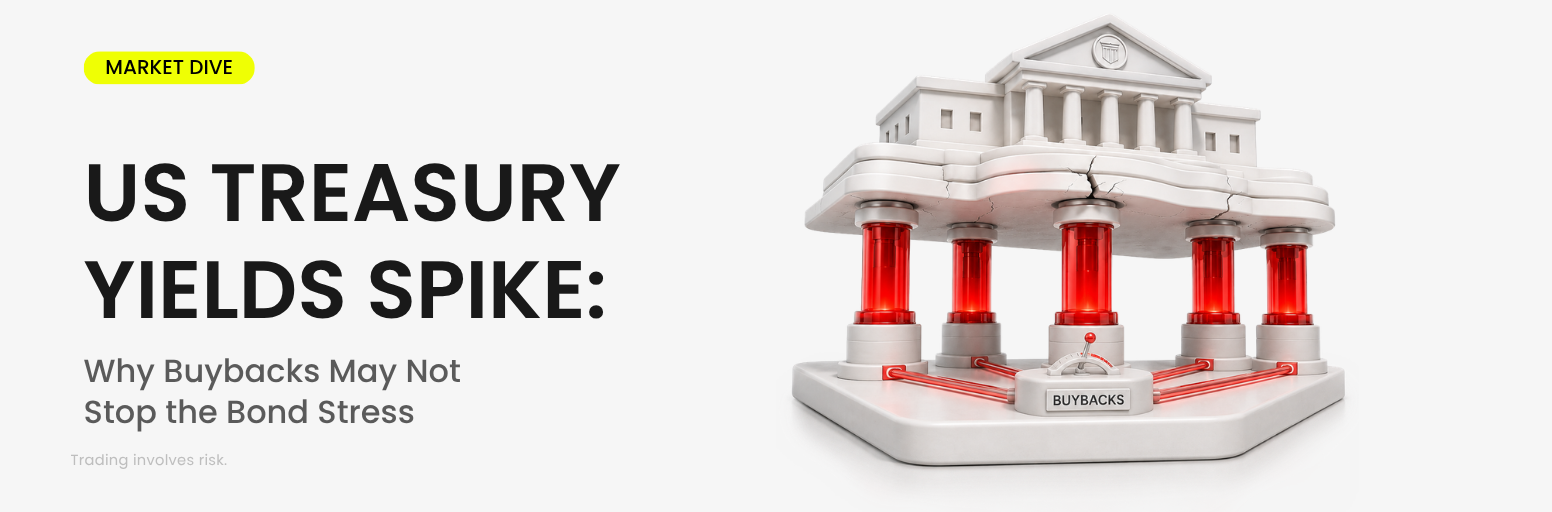
US Treasury yields are flashing a warning again.
On August 18, the 30-year US Treasury yield briefly topped 5.32%, reaching a nearly 19-year high last seen in 2007. The 10-year US Treasury yield also broke above 4.7%, adding fresh pressure to stocks, gold, and broader risk sentiment.
This was not only a US story. On August 17 and 18, long-term bond yields in the US, Japan, and Europe hit multi-year highs almost at the same time. The 30-year Japanese government bond yield reached 4.14%, its highest level since 1999.
Then came the policy response.
On August 19, US Treasury Secretary Bessent announced that buyback sizes for 10-20 year and 20-30 year Treasuries would be at least doubled, while the cap for a single operation would rise from USD 20 billion to at least USD 40 billion.
The market reacted quickly. The 10-year yield dropped from 4.72% to 4.65% intraday. But the relief did not last. By August 21, the 10-year yield had rebounded to 4.74%.
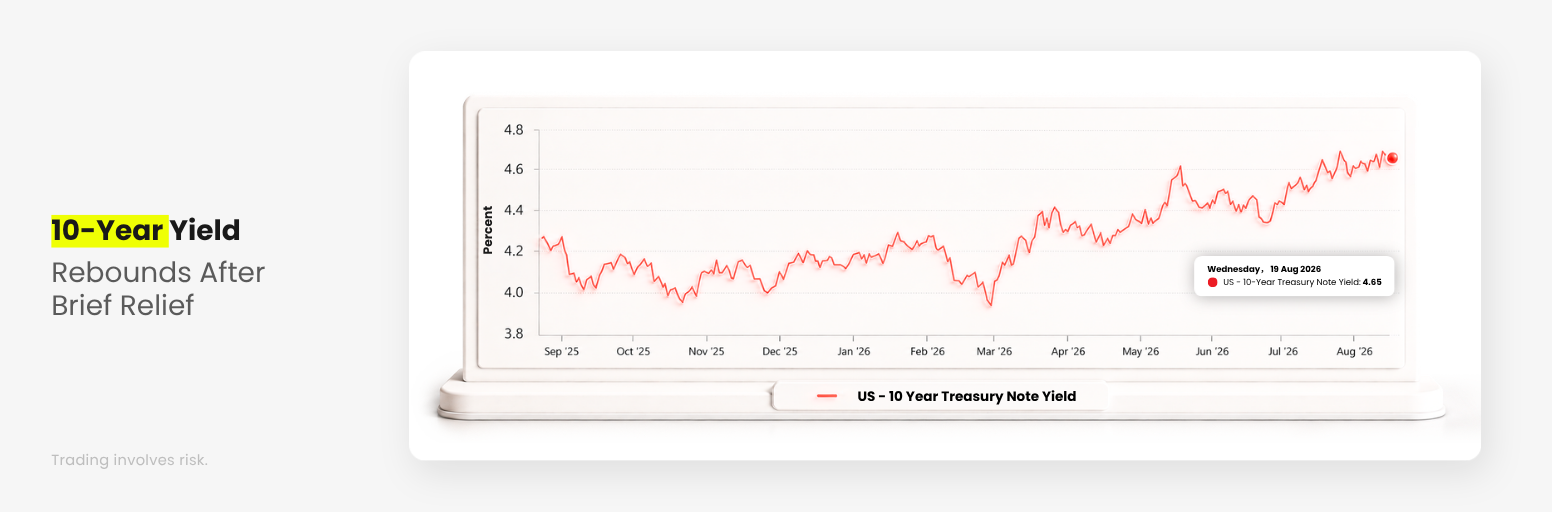
Treasury buybacks may have calmed the market briefly, but they did not erase the pressure behind rising yields.
So the key question for traders is simple: was this real easing, or just a short-term attempt to manage bond-market stress?
Why US Treasury Yields Are Spiking
Rising US Treasury yields matter because they change where capital wants to go.
Investors can choose between stocks, bonds, gold, and cash. When long-term Treasuries offer a high enough return, they start pulling money away from other assets.
That is the substitution effect.
When the 10-year US Treasury yield moves above 4.7%, investors can earn a strong return from government bonds without taking equity-market risk. That pressures stocks. It also weighs on gold because gold does not provide yield.
But this round of rising yields is unusual.
It is not mainly being driven by an overheating economy. July nonfarm payrolls unexpectedly fell by 23,000, while CPI matched expectations at 3.4% year over year. Overall, recent data has leaned weak.
The bigger issue is capital demand.
After the AI boom began, major technology companies shifted from being cash-rich firms into massive capital spenders. Data centers, chips, servers, power infrastructure, and AI hardware all require enormous investment.
Based on current projections, total capital spending from the Magnificent Seven could reach USD 750 billion in 2026.
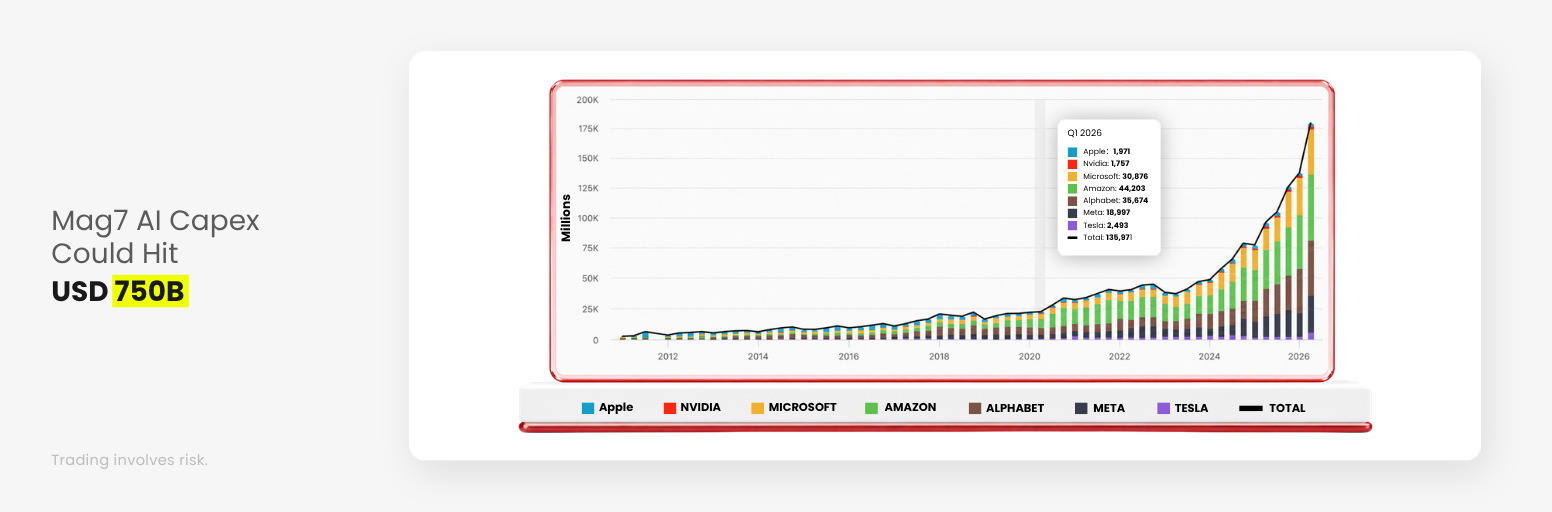
That means two powerful borrowers are competing for long-term capital at the same time: the world’s biggest technology companies and the US government, the world’s largest sovereign debt issuer.
When demand for capital rises, funding becomes more expensive. To attract buyers, yields need to move higher.
AI Capex, US Debt and Oil Add to Bond Market Stress
US debt is another major pressure point.
Total US debt has already surpassed USD 40 trillion, less than five years after crossing USD 30 trillion. Treasury interest payments this fiscal year have reached USD 1.17 trillion, up 15% year over year.
That makes the market more sensitive to every new wave of Treasury issuance.
Fed uncertainty is also adding to the risk premium. After Warsh took office, the Fed reduced forward guidance, making it harder for markets to predict the next policy move. When visibility falls, investors demand more compensation for holding long-term debt.
Oil adds another layer. Instability in the Middle East has pushed crude prices close to USD 100 per barrel, raising concerns that inflation could stay sticky. If higher oil costs pass through to wages and consumer prices, inflation may become harder to reverse.
That is why long-term yields are rising even though recent growth and labor data look weaker.
How Treasury Buybacks Affect Yields and Gold
The Treasury buyback announcement initially pushed yields lower because it changed short-term supply and demand.
Before the announcement, long-term Treasuries were under pressure because buyers demanded higher yields. Once the Treasury appeared as a large buyer, the market quickly repriced that demand.
That helped stocks and gold rise temporarily.
For stocks, lower Treasury yields reduce valuation pressure. For gold, lower real yields reduce the opportunity cost of holding a non-yielding asset.
This explains why gold jumped after the announcement. When yields fall and debt stress rises, gold can benefit from both lower real-yield pressure and safe-haven demand.
But the key point is this: the buyback does not remove the government’s borrowing needs.
The Treasury still needs money to fund the buybacks. To get that money, it must issue new Treasuries.
So this is not quantitative easing. It does not reduce net financing needs, and it does not create new liquidity like a Fed asset-purchase program.
Instead, it is closer to a debt maturity swap.
The Treasury issues more short-term debt, then uses the cash to buy back older long-term Treasuries from the market. Long-term supply falls, but short-term supply rises.
In simple terms, the Treasury is swapping long-term duration risk for future refinancing risk.
Why Treasury Buybacks Are Not Real Easing
The buyback program can improve market functioning, but it does not solve the debt problem.
Even if buyback sizes are doubled, the amount remains small compared with more than USD 40 trillion in total US debt.
The mechanics also matter. The Treasury can issue 3-month to 1-year short-term Treasuries to raise cash, then use that cash to buy back older long-term Treasuries held by dealers.
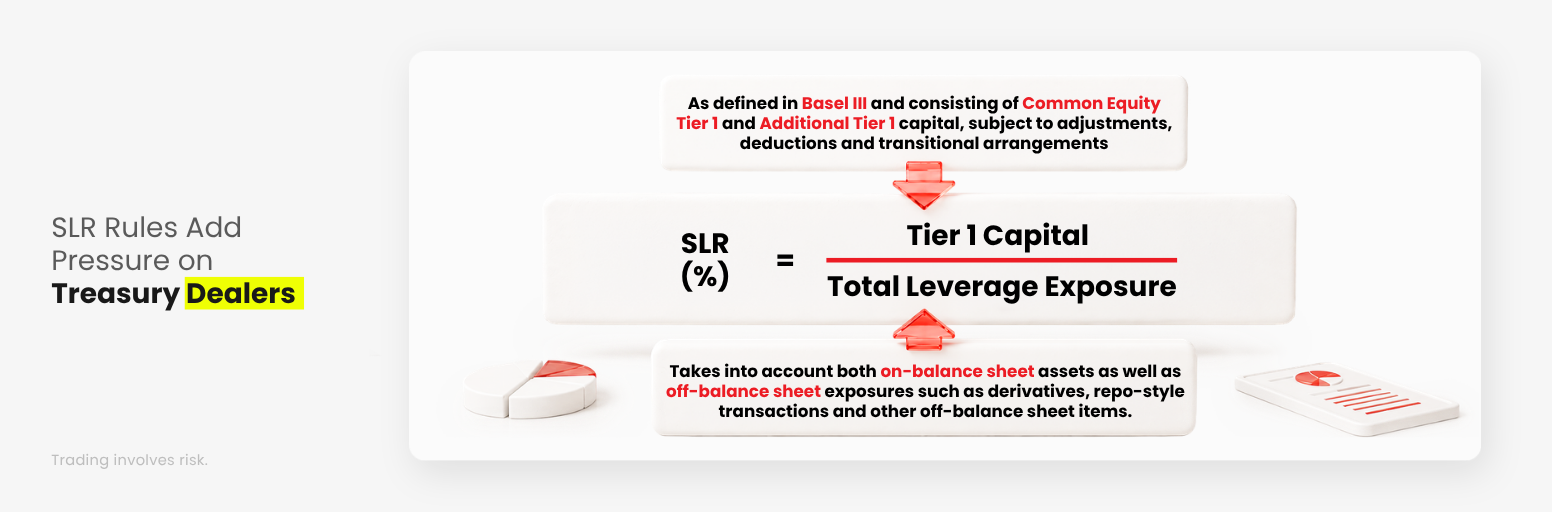
This helps market makers because older Treasuries still take up balance-sheet capacity under the Supplementary Leverage Ratio rules. By buying those bonds back, the Treasury helps dealers shrink their balance sheets and frees up room to absorb future issuance.
But there is a trade-off.
The Treasury is effectively replacing lower-interest long-term debt with higher-interest short-term debt. The debt burden does not disappear. Refinancing risk may increase if short-term rates stay high.
This strategy depends on two assumptions: dealers keep buying new Treasuries, and the Fed eventually cuts rates meaningfully.
That is still a risky bet.
Why Bond Market Stress Returned After the Buyback News
The rebound in yields shows that markets quickly looked past the short-term relief.
The Treasury buyback helped sentiment, but the larger problem remained unchanged.
The Treasury is still borrowing. Debt supply is still heavy. Interest costs are still rising. Long-term capital is still scarce.
That is why the 10-year yield dropped after the announcement, then quickly bounced back to 4.74%.
In other words, this was a stabilizer, not a solution.
It may reduce stress in specific parts of the bond market. It may help dealers clear balance-sheet capacity. It may calm sentiment for a few trading sessions.
But if debt supply remains heavy and long-term capital demand keeps rising, bond-market stress can return quickly.
What Rising US Treasury Yields Mean for Gold Prices
Gold reacted strongly to the Treasury buyback news.
After Bessent’s announcement, gold rose from around USD 4,420 per ounce to approximately USD 4,700 per ounce.
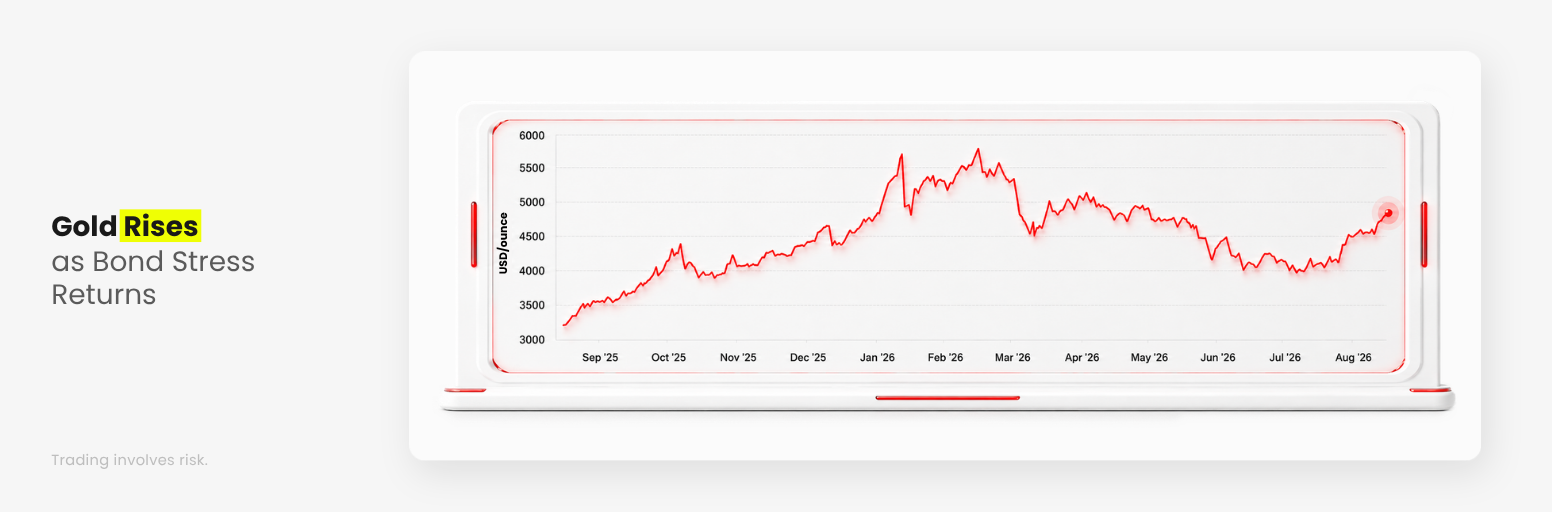
The logic is clear. Lower yields support gold, while debt sustainability concerns increase its safe-haven appeal.
But the move may not be one-directional.
Once the market realizes the buyback is more of a balance-sheet adjustment than real easing, some long positions may take profit. That could trigger short-term volatility or a correction.
Still, gold’s longer-term allocation story remains intact.
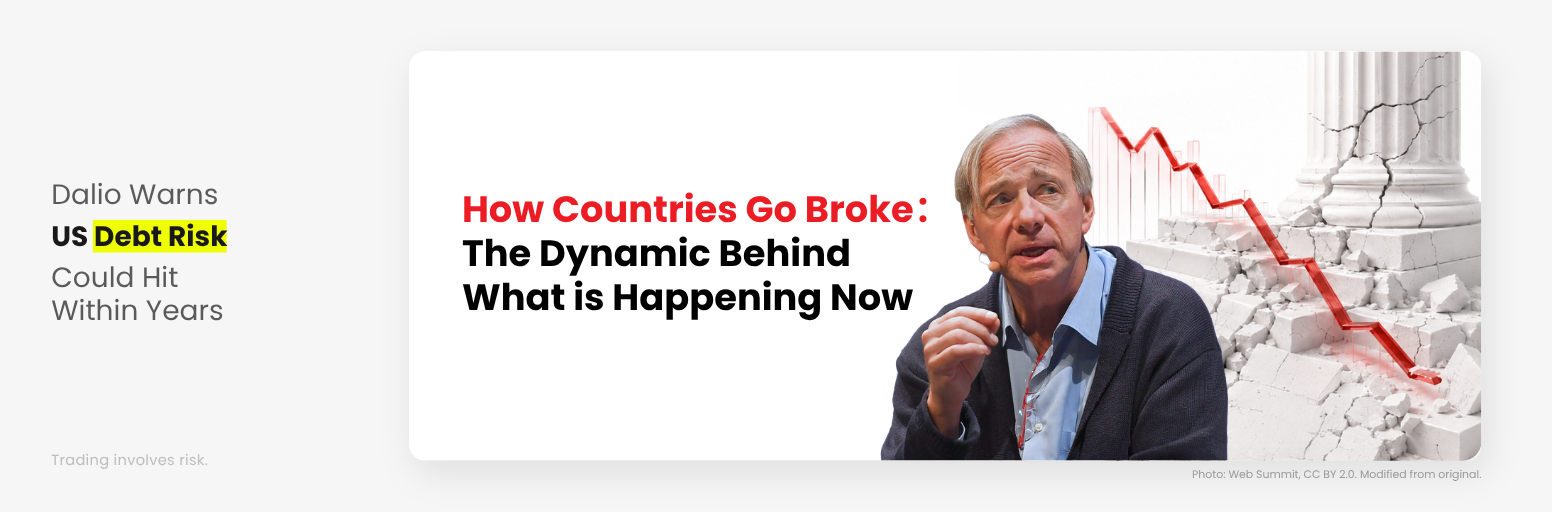
Ray Dalio recently warned that the US debt crisis could break out within three years and recommended safe-haven assets such as gold. Central-bank demand also remains supportive, with the Bank of Korea increasing its gold ETF holdings for the first time in more than a decade.
In the short term, gold may consolidate at high levels and face volatile pullbacks. But from a fundamental perspective, its allocation value remains strong.
US Treasury Yields, Gold and Bond Stress: What Traders Should Watch
The Treasury buyback helped calm the market, but it did not end the bond stress.
In Q4, some pressure may ease. Warsh’s reform plan will roll out gradually, while the Jackson Hole Symposium and September FOMC meeting may give markets clearer guidance. The new fiscal year starts in October, which could reduce pressure from accelerated fiscal spending.
US-Iran tensions also remain important. If tensions ease, oil-price pressure may cool and Treasury yields could stabilize. If not, long-term yields may test higher levels again, with the 10-year yield potentially moving toward 5%.
For gold, the picture is constructive but volatile.
High long-term Treasury yields remain the biggest constraint. But debt concerns, central-bank buying, and safe-haven demand continue to support the broader allocation case.
For traders, the key is not to chase every spike. Gold still has long-term support, but short-term pullbacks may offer a more disciplined entry point.
The Treasury can manage market stress.
But it cannot make the debt pressure disappear.
By D Prime Analysis Team
Macro and market strategy research by D Prime’s in-house analysis team.
Disclaimer
The information contained herein is provided for general informational and educational purposes only and does not constitute investment advice, financial advice, trading advice or any other form of professional advice, a recommendation, or an offer or solicitation to buy or sell any financial instruments or engage in any trading strategy.
Trading in leveraged products such as contracts for difference (CFDs) involves a significant risk of loss and may not be suitable for all investors. Past performance is not indicative of future results. Any references to market trends, asset performance, price levels, or forward-looking statements reflect opinions or general market commentary as at the date of publication and are subject to change without notice.
This article does not take into account any individual investor’s objectives, financial situation, or risk tolerance. Readers should conduct their own independent research and seek professional advice before making any investment or trading decisions. D Prime and its affiliates make no representations or warranties about the accuracy or completeness or reliability of this information and disclaim any and all liability for any direct, indirect, incidental, consequential, or other losses or damages arising out of or in connection with the use of or reliance on any information contained herein. The above information should not be used or considered as the basis for any trading decisions or as an invitation to engage in any transaction. Do not rely on this article to replace your independent judgment.
“D Prime” is a brand name of D Prime Vanuatu Limited, a company incorporated and regulated by the Vanuatu Financial Services Commission (Company Number: 700238). The availability of products and services may vary depending on jurisdiction and applicable regulatory requirements.